rizzitgo Steamer for Small Rentals
rizzitgo Steamer for Small Rentals
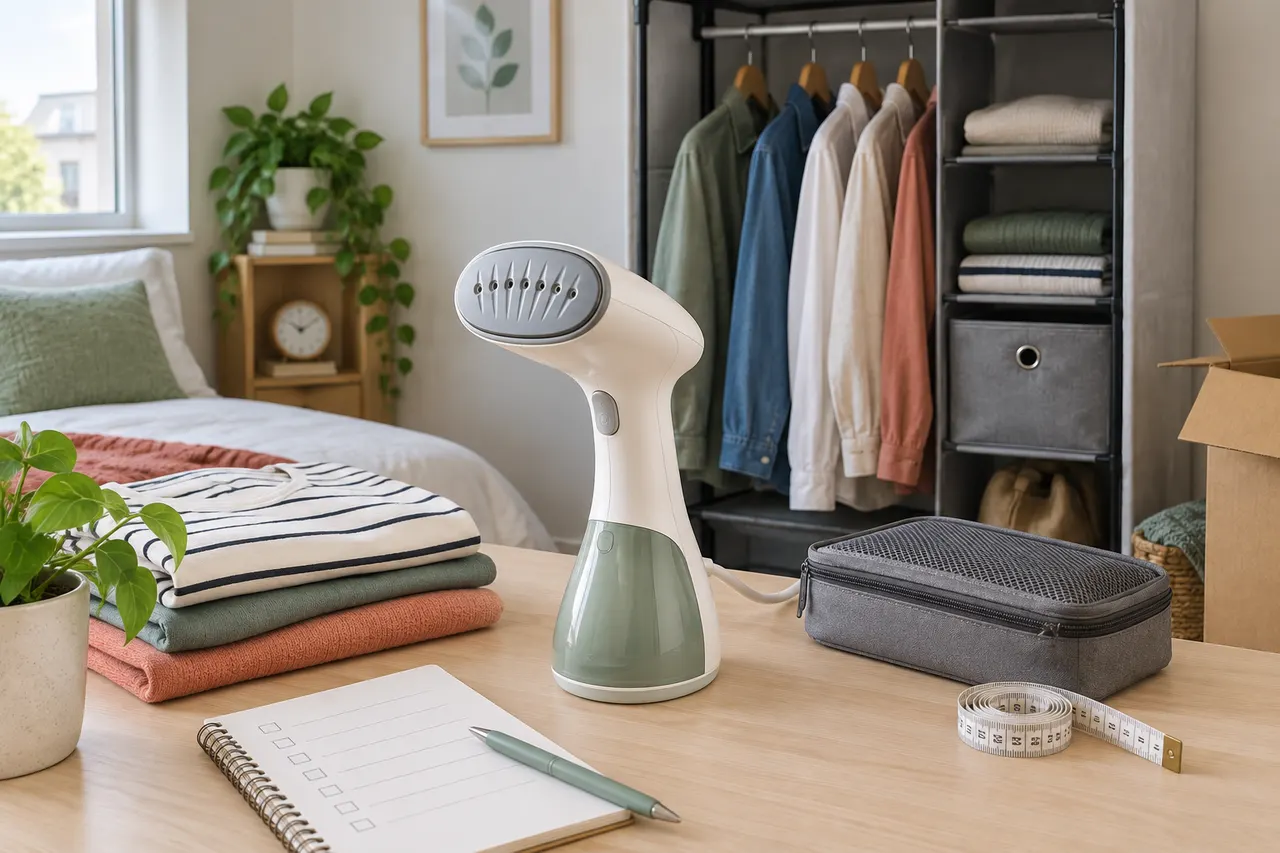
Caption: A reference for choosing a handheld garment steamer for small-space clothing care.
Renters Should First Confirm Their Clothing Care Tasks
Rental wardrobes typically come with three practical constraints: limited space, difficulty setting up an ironing board, and the need to quickly freshen clothes before heading out. Whether the rizzitgo handheld steamer is worth buying depends not just on its compact appearance, but on determining which clothing care tasks it needs to accomplish.
Situations where it's worth prioritizing include:
Shirts, T-shirts, thin dresses, and lightweight jackets often have wrinkles
No fixed ironing area in the room, so clothes must be handled quickly near the wardrobe, behind the door, or by the bathroom
The main need is to make clothes look smoother, not to create precise creases or shape thick fabrics
Handling 1–3 garments per session, with high frequency but short duration 🧺
Situations where you should rule it out early: if you often deal with thick coats, stiff dress pants, or deeply wrinkled cotton and linen garments, or if you need to press sharp creases like a traditional iron, a handheld steamer may only serve as a supplement and cannot replace full ironing equipment.
This article only helps renters, small-wardrobe users, and those with lightweight garment care needs decide whether to add the rizzitgo handheld steamer to their list; it is not applicable to commercial clothing stores, high-frequency batch ironing, or scenarios requiring high fabric shaping.
What a Handheld Steamer Can Solve and What It Cannot Replace
The core value of a handheld steamer is using steam to soften fabric fibers, reducing everyday wrinkles and improving neatness before heading out. It's more of a quick touch-up tool than a professional ironing device.
It can typically help with:
Light to moderate wrinkles caused by wardrobe compression
Surface creases from shipping packaging or suitcase folding
Visual smoothing of thin shirts, knitwear, and lightweight jackets
Temporary garment freshening when an ironing board can't be set up
It cannot reliably replace:
The heavy pressure and shaping of a traditional iron
Precise pressing of dress pant creases, pleated skirt pleats, etc.
Deep wrinkle removal from thick wool, denim, or stiff cotton and linen
Continuous ironing of large quantities of clothes
So when determining if it's worth buying, the key isn't "can it iron all clothes?" but "does it cover the clothing freshening issues you encounter most often in a week?" If your clothes are mostly lightweight tops and you only need to reduce the wrinkled look, its value is higher; if you expect it to fully replace an iron, you should lower your expectations.
From Product Images: Body Size, Grip, and Storage Placement
From product display images, you can first observe three things: whether the body is slim, whether the handle is easy to hold with one hand, and whether the nozzle and water tank create a noticeable front-heavy feel. Renters especially need to consider storage because no matter how small the machine is, if the power cord, water tank, and nozzle are hard to store, it may end up as clutter on the desk.
Before ordering, it's recommended to do a "virtual placement" based on your actual room layout:
Is there a shelf in the wardrobe where the body can stand upright?
Can a hook behind the door or a shelf support the machine's weight?
Is the outlet close enough to the hanging area?
Is there a place for the nozzle to cool and dry after use?
If the page only shows retouched images without clear size diagrams or scale references, you cannot judge based solely on descriptions like "compact" or "portable." A safer approach is to verify the product page's specifications section, seller's instructions, and packaging list to confirm body height, base width, net weight, and power cord length.
For renters, lighter is not always better. A very light machine may have a small water tank and short continuous steam time; a heavy one will make prolonged holding more tiring. A reasonable way to judge is to place it in your own usage scenario: if you only handle one shirt at a time, prioritize lightweight; if you need to handle jackets and pants, grip stability and water tank capacity matter more.
Impact of Water Tank, Nozzle, and Power Cord on Daily Use
The experience of a handheld steamer largely depends on three seemingly ordinary parts: the water tank, nozzle, and power cord. They determine whether you'll be willing to take it out every day or let it sit unused after purchase.
Part | What to check before ordering | Impact on rental use |
|---|---|---|
Water tank | Capacity, detachability, fill opening size | Affects continuous use time and cleaning difficulty |
Nozzle | Steam hole distribution, anti-scald structure, whether brush attachment included | Affects wrinkle coverage area and safety distance |
Power cord | Length, plug type, whether voltage stated on page | Affects whether you can use it directly by the wardrobe or hanging area |
If the water tank is too small, you'll refill frequently; if too large, the wrist strain increases when full. If the nozzle lacks clear anti-scald design, you'll need to be more careful about the distance to fingers, hangers, and walls. If the power cord is too short, in a rental setting you may need to move the hanger or use a compliant extension cord, increasing operational cost 🔌.
Also verify the applicable voltage and plug type. When buying cross-border, voltage, plug shape, and safety certification requirements vary by country and region. Don't assume all small appliances can be used directly at the destination; if the product page doesn't specify, ask the seller before deciding to order.
Suitability Limits for Shirts, Light Jackets, and Pants
If you only look at the category name "clothes steamer," it's easy to overestimate its capabilities. A more reliable judgment is to break it down by garment type.
Shirts are the most common use case. Lightweight shirts, commute shirts, and ordinary cotton-blend tops are generally more suitable for quick steam treatment, but structural areas like collars, cuffs, and plackets may still require more detailed smoothing and multiple steam passes. If you wear shirts to work daily, it may have practical value.
For light jackets, it depends on fabric and cut. Soft lightweight jackets, casual windbreakers, and knit cardigans are usually easier to steam than stiff jackets. Jackets with lining, thick padding, or stiff shoulder lines can only have surface wrinkles improved by a handheld steamer; they cannot restore the full shape.
Pants require more caution. Regular casual pants and thin wide-leg pants can be tried with hanging treatment, but if you need sharp creases or deep wrinkles on the legs, a traditional iron is usually more reliable. A handheld steamer is better for "not looking wrinkled" rather than "pressing formal lines."
For special fabrics like silk, wool, leather, coated fabrics, sequin decorations, and heat-sensitive materials, check the garment care label before ordering and using, and test on an inconspicuous area with low risk first. Don't put high-temperature steam close to expensive or uncertain fabrics 👕.
Specifications and Seller Information to Verify Before Ordering
Verification scope before publishing: This article is written based on the product theme, platform identity, and image information provided by the user; specific prices, inventory, promotions, shipping, plug version, warranty policy, and page link status need to be confirmed on the rizzi-tgo.com product page and checkout page on the order date. Verification date: 2026-09-08.
Before ordering, check at least the following:
Does the product name match the page title and cart name?
Are rated power, applicable voltage, plug type, and water tank capacity stated?
Is the packaging list shown, confirming whether brush, measuring cup, anti-scald accessories, or storage bag are included?
Are the return and exchange conditions clear, especially whether returns are supported after using with electricity?
Does the checkout page show final shipping fees, tax notices, and estimated delivery method?
Are the seller's contact information, order confirmation email, and after-sales channel clear?
If the rizzi-tgo.com page only provides promotional images without key appliance specifications, it's not advisable to order based on images alone. Unlike ordinary clothing, small appliances are affected by voltage, plug, heating structure, and after-sales conditions. Especially for renters who face hassle with returns and limited storage, it's even more important to clarify specifications before ordering.
Also note destination country regulations. Some regions have requirements for safety certification, plug standards, and import declaration of small appliances. When purchasing, fill in recipient and product information truthfully; do not under-declare, split, or hide product attributes to reduce taxes.
Basic Safety and Dry-Steam Check After Receiving
After receiving a handheld steamer, it's not recommended to use it on formal clothes immediately. Do a basic safety check first to reduce risks of leakage, odor, overheating, and fabric damage.
Recommended sequence:
Check the outer packaging, body, nozzle, water tank, and power cord for damage
Compare with the packaging list to confirm accessories are complete
Check that the plug, voltage label, and manual match the order page
Add a small amount of clean water and test-spray briefly away from clothes
Observe for abnormal smell, leakage, intermittent steam, or abnormal heating of the body
After the nozzle cools, pour out remaining water and keep the tank ventilated and dry
For the first dry-spray, do not aim the nozzle at hands, face, wall outlets, or heat-sensitive surfaces. Steam temperature can cause burns and may dampen some wallpaper, wood veneer, or coated surfaces. In a rental environment, especially avoid test-spraying directly on beds, power strips, cardboard boxes, or inside closed wardrobes.
If during the dry-spray stage there is already leakage, unusual noise, burnt smell, or inability to produce steady steam, stop using it, keep the packaging, order screenshots, and photos of the problem, then contact the seller. Do not continue using a faulty machine to test expensive clothes.
Final Action: Decide Whether to Add to Your List Based on Space, Frequency, and Garment Type
You can use a simple judgment to decide whether to add the rizzitgo handheld steamer to your shopping list: can it, in your rental space, solve mild clothing wrinkle problems that occur at least two to three times a week at low cost?
People suitable for adding it to their list:
Small wardrobe space, but have a stable hanging area
Mainly wear shirts, T-shirts, light jackets, and lightweight dresses
Don't want to keep an ironing board set up long-term
Handle only a small amount of clothes each time
Able to verify voltage, plug, water tank, and after-sales information before ordering ✅
People not advised to prioritize purchasing:
Mainly deal with thick coats, denim, stiff cotton and linen, or formal dress pants
Need sharp pant creases, collar shaping, or batch ironing
Room outlet location inconvenient, requiring frequent furniture moving during use
Product page cannot confirm appliance specifications or return conditions
High requirements for small appliance safety certification and after-sales, but page information insufficient
What this type of product truly saves is time and space, not guaranteed money. It may reduce the hassle of temporary dry cleaning, changing clothes before going out, and organizing clothes; but it also adds costs for appliance safety, storage, cleaning, and after-sales handling. For renters, the premise for being worth buying is: your garment types are lightweight enough, usage frequency is high enough, page specifications are clear enough, and you can pass a basic safety check after receiving it. Otherwise, it may be more prudent to continue using hangers, bathroom steam assistance, or a traditional iron.
Browse our latest products and find your next favorite item.