rizzitgo Steamer Anti-Drip Feature Guide
rizzitgo Steamer Anti-Drip Feature Guide
rizzitgo Steamer Anti-Drip Feature Guide
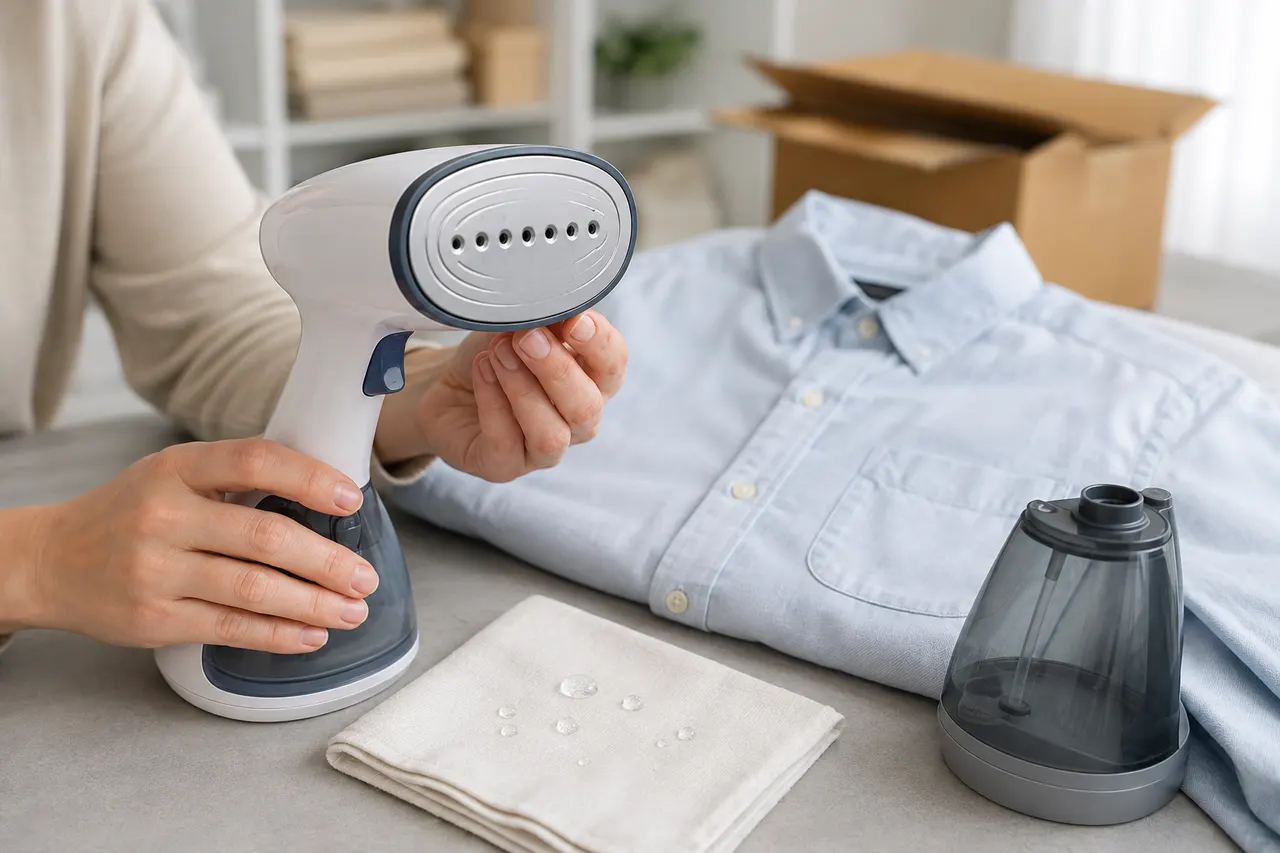
Figure: Assessing water stain risk on a garment steamer from the nozzle, water tank connection, seals, and usage conditions.
Verification date: September 3, 2026.
This article addresses a specific question: when choosing a garment steamer on rizzi-tgo.com, how to judge the anti-drip capability based on product information and visible structure, to reduce the risk of leaving water spots, water marks, or mineral residue during steam ironing. After reading, you can compile a list of items to confirm with the seller and decide whether to keep or exclude a candidate product.
This article is not suitable for proving that a certain model will never drip. As of the verification date, the writing materials do not provide verifiable specific product pages, model manuals, real-time prices, inventory, after-sales policies, or physical test records, so it cannot be asserted that a particular garment steamer on rizzi-tgo.com is equipped with a specific anti-drip mechanism. The judgment methods in this article are for pre-purchase screening and do not replace the product manual or actual inspection.
Specific Problems Solved by Anti-Drip Feature and Applicable Garments
The anti-drip feature is mainly used to reduce water that has not fully vaporized from dripping out of the nozzle holes. It is more valuable for dark-colored garments, thin shirts, delicate fabrics, and clothing that requires spot treatment, which easily show water marks. 💧
But "anti-drip" does not mean no water will come out under any conditions. Insufficient preheating, nozzle pointing downward, condensation accumulating in the hose, water tank not properly seated, or damaged seals can all cause water to appear from different locations.
When handling garments labeled dry clean only, no steam, or sensitive to water, always follow the care label first. Even if the device has an anti-drip structure, this does not justify ignoring garment restrictions.
Differences Between Steam Condensation, Nozzle Water Accumulation, and Water Tank Leakage
Before judging the structure, first distinguish where the water comes from:
Phenomenon | Common Location and Conditions | Key Points to Check Before Ordering |
|---|---|---|
Steam condensation | Hose, inside nozzle, or low-temperature surfaces, common during initial startup | Preheating indicator, hose arrangement requirements, startup drainage instructions |
Nozzle water accumulation | Around steam holes, may occur when temperature is insufficient or nozzle angle is too low | Temperature control, anti-drip valve, allowed usage angle |
Water tank leakage | Water tank connection, water filling cap, or base of the unit | Seal ring, locking structure, water tank installation method, and accessory supply |
If water only appears during cold start, the problem may be related to condensation and preheating; if water seeps from the tank connection even when idle, you should check the seal or installation structure. The two cannot be lumped under the same "anti-drip" label.
How to Read Anti-Drip Information in Product Listings
When reviewing candidate products on rizzi-tgo.com, do not just look for the word "anti-drip." Effective information should explain how the feature works structurally, under what conditions it is effective, and what postures are restricted.
More valuable information includes:
Name and location of anti-drip valve, check valve, one-way valve, or temperature control mechanism
Preheating indicator method for reaching usable steam state
Clear instructions on whether the product can be used vertically, tilted, or horizontally
Correct water tank installation, maximum water fill level, and recommended water quality
Downloadable manual that matches the model on the page
Return, exchange, or accessory policies for leaks, seals, and water tank failures
If there are only marketing phrases without structural diagrams, usage restrictions, or manual support, treat "anti-drip" as a claim to be verified, not proven performance. 🔍
Due to insufficient current information, this article does not cite real-time checkout steps, shipping fees, taxes, or return/exchange periods on rizzi-tgo.com. Before purchasing, always refer to the checkout page and the policies displayed at that time, and save screenshots of the product description, model, and order terms.
Finding Observable Evidence from Nozzle, Water Tank Connection, and Seal Images
Product images can only provide observable clues and cannot replace disassembly or operational testing. When examining the nozzle, look for an independent drainage area around the steam holes, markings on the back of the nozzle indicating valve position, and whether the page shows an internal structure diagram matching the model.
For the water tank, focus on:
Clear locking position between tank and body
Visible valve core, spring valve, or corresponding structural description at the outlet
Independent seal ring on the water filling cap
Smooth area around the connection without protrusions that could easily pinch the seal
Whether seal rings, water tank, or valve components are replaceable parts
Do not judge anti-drip effectiveness solely by neat shell seams or the number of nozzle holes. When images do not clearly show the seal location, the most reliable next step is to request close-up photos of the model or manual pages, rather than guessing the structure yourself.
Postures and Temperature Conditions Where Anti-Drip Structure May Be Limited
Anti-drip mechanisms typically rely on temperature, pressure, valve state, and device orientation working together. Even a candidate with a check valve may lose expected effectiveness under the following conditions:
Pressing the steam trigger continuously before preheating is complete
Inverting the device or keeping the nozzle below the water tank and hose condensation point for extended periods
Filling the water tank above the maximum level
Frequent on/off cycles causing nozzle temperature to drop
Scale or impurities affecting valve closure
Seal ring aging, misalignment, or trapped foreign objects
Therefore, "can be used horizontally" and "anti-drip" should be verified separately. Unless the manual for the specific model explicitly permits it, do not assume from promotional images that the device can be operated flat or inverted. ⚠️
Checklist of Questions to Confirm with the Seller Before Ordering
When asking rizzi-tgo.com sellers or customer service, always request answers for the exact model on the page:
Does this product have an independent anti-drip valve or temperature-controlled check mechanism? Where is it located?
What usage angles does the anti-drip feature allow? Does it support horizontal ironing?
How is preheating completion indicated? Do I need to first discharge condensation away from the garment at startup?
What sealing structures are used for the water tank connection and filling cap? Can the seal ring be purchased separately?
If water continuously leaks from the nozzle or tank connection after first filling, what procedure should I follow?
Can you provide a manual, close-up photos of the structure, and rated voltage information that exactly match the model on the product page?
Save the responses together with the product page. If the seller only repeats "won't leak" without explaining posture, preheating conditions, and troubleshooting, that response is insufficient to support a purchase decision.
Basic Inspection Steps After Receiving Without Contacting Garments
First inspection should follow the included manual and be conducted in a water-resistant, stable area away from children and electrical appliances. Do not test directly on garments, skin, or outlets. 🧪
Check in this order:
With power off, check that the water tank, cap, valve port, and seal ring are complete, flat, and free of visible cracks.
Add appropriate water up to the maximum level per the manual, and ensure the tank is fully locked.
Let it sit and observe the tank connection and base. If it leaks continuously while unplugged, stop using it.
After plugging in, wait for the device to clearly indicate preheating is complete, then briefly release steam with the nozzle pointed toward a safe water-resistant area.
Observe whether only a small amount of condensation appears at startup, or whether obvious water droplets continue to spray after stable steam output.
Turn off and cool the device, record the leak location, duration, usage posture, and water level, and keep clear photos or videos.
Do not disassemble the unit yourself or block the steam holes to test pressure. If there is continuous leaking, unusual noises, burning smell, or water entering the body, cut power immediately and contact the seller according to the after-sales process shown on the order page.
Final Action: Decide to Keep or Exclude Candidates Based on Water Stain Risk
If you frequently handle dark, thin, or easily water-marked garments, prioritize keeping candidates with complete information: clear model, anti-drip structure explained, allowed angles specified, recognizable preheating indicator, and verifiable seal replacement and leak after-sales arrangements.
If the page only has vague promotion, the seller cannot provide a model-specific manual, or is unwilling to confirm horizontal usage restrictions, exclude that candidate, especially for high water-stain-risk garments.
This screening method does not directly reduce the product price, but it can reduce returns, garment water stains, and repeat purchase risks caused by incorrect expectations. It is suitable for buyers willing to verify structure and usage conditions before ordering; if you need a device that can operate at any angle and never leaves marks even on water-sensitive garments, do not decide based solely on the "anti-drip" label.
This article was compiled by the Panda-Buy Editorial Desk from an editorial team perspective, based on writing materials available as of September 3, 2026, with automated fact-boundary and risk checks, and does not represent actual purchase, receipt, or trial experience.
Agent Platform Shopping FAQ
1. What is the reason for not relying on Google Sheets on rizzi-tgo.com?
Google Sheets works acceptably only when the spreadsheet contains a very limited number of items. As the product count grows, the interface slows down considerably and the platform becomes noticeably laggy. The problem is worse on mobile phones, where the display quality drops and locating a specific product turns into a real hassle. With the same product set, the rizzi-tgo.com spreadsheet loads more quickly and presents a cleaner, more usable layout.
Browse our latest products and find your next favorite item.