rizzitgo Hotel Shirt Steaming Guide
rizzitgo Hotel Shirt Steaming Guide
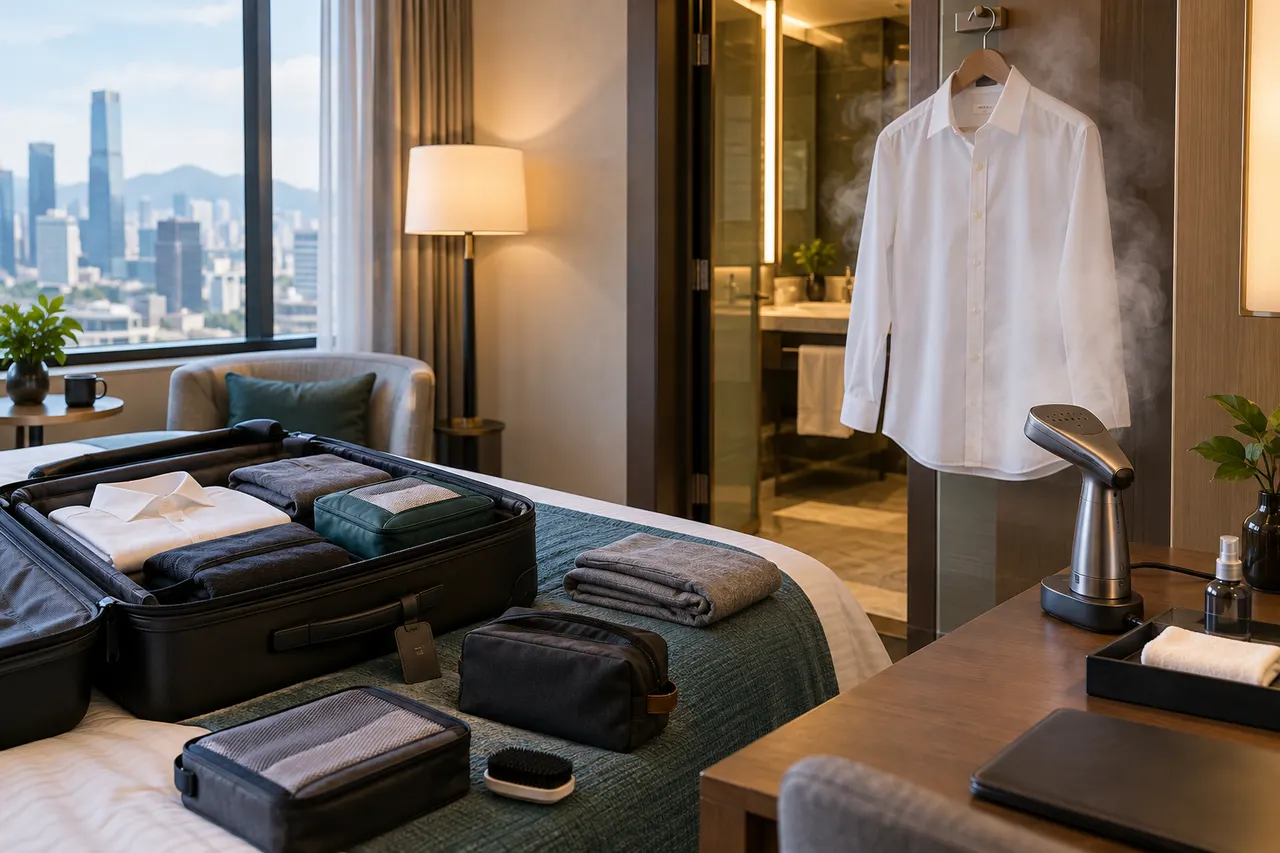
Wrinkle treatment for business travel clothing isn't about getting clothes as crisp as new. It's about having a limited time after arriving at the hotel before a meeting, visit, or dinner, and figuring out how to get shirts, thin suit jackets, or dresses into presentable shape using controllable methods.
This article is for users who have already filtered, ordered, and received a portable garment steamer through shopping agents or product spreadsheet tools like rizzitgo, and for those deciding whether such a device is worth packing. It is not for situations requiring professional creasing, heavy coat shaping, serious shrinkage repair, stain cleaning, or luxury fabric care.
Verification date: September 9, 2026. Voltage, plugs, product accessories, prices, inventory, shipping restrictions, and after-sales conditions may change; before actual use, refer to the product page, seller description, rizzitgo order page, warehouse inspection photos, and destination hotel power conditions.
First assess the wrinkle severity and time window of business travel clothing
After arriving at the hotel, don't rush to fill the steamer with water and turn it on. A safer approach is to take out all the clothes you need to wear, hang them on hangers, and spend 2 minutes doing three things: check wrinkle locations, confirm fabric labels, and estimate available time.
Light wrinkles usually appear at the shirt hem, cuffs, and back near the waistline—these are creases from suitcase folding. Moderate wrinkles form obvious horizontal lines on the chest, placket, sleeves, and skirt hem, which become more noticeable under lighting. Severe wrinkles are common in clothes that have been vacuum-compressed for a long time, packed while damp, or made from wrinkle-prone fabrics like cotton and linen.
If you have more than 45 minutes before heading out, you can follow the complete process: hang to relax, spot steam, natural moisture dissipation, and final check. If you only have 15 to 25 minutes, prioritize the most visible areas: collar, chest, placket, cuffs, and jacket front panels. ⏱️
A practical judgment: if wrinkles are mostly covered by a suit, jacket, or bag strap once worn, you don't need to pursue all-over smoothness; if wrinkles are concentrated on the front, collar, or photo areas, it's worth spending time treating them.
Time window | Priority treatment | Not recommended |
|---|---|---|
Over 45 minutes | Entire shirt, jacket front panels, skirt hem | Continuous high heat on the same spot |
25 to 45 minutes | Collar, chest, cuffs, obvious horizontal creases | Re-washing or blow-drying until fully dry |
15 to 25 minutes | Front visible areas and camera-facing areas | Treating thick jackets, complex pleats |
Less than 15 minutes | Change clothes, cover with jacket, local damp towel pressing | Trying unfamiliar fabrics temporarily |
What problems can steaming solutions solve in a hotel environment
The core advantage of steaming in a hotel is quickly relaxing fibers, not replacing professional ironing. It's suitable for shallow creases from suitcase packing, slight wrinkles on shirts before wearing, fold lines on dress hems, and lack of smoothness on thin jacket front panels.
If you are selecting a portable garment steamer on rizzitgo, you should first look at usage conditions, not just appearance photos. For business travelers, the key isn't the largest water tank, but whether it suits the destination voltage, has clear plug specifications, can stand stably or be placed safely, and whether warehouse inspection photos confirm complete accessories.
In a hotel room, steaming can usually solve these problems:
Light wrinkles on the front of shirts from suitcase folding
Creases on thin polyester, blends, or some wrinkle-resistant fabrics
Slight unevenness on skirt hems, trouser cuffs, or jacket front panels
Collar and cuff collapse caused by folding
It is not suitable for these problems:
Deep creases on thick cotton, thick linen, or wool coats
Fabrics that already have shine marks, burn marks, or deformation
Oil stains, drink stains, sweat stains, and cosmetic stains
Situations requiring sharp trouser creases, shirt press lines, or formal wear shaping
If you're meeting clients or attending a formal meeting that day, the goal after steaming should be clean, smooth, and free of obvious fold lines, not laundry-level crispness.
Treatment order for shirts, thin suit jackets, and dresses
Treat shirts first, then thin jackets, then dresses or trouser hems. This order fits business travel: shirts are worn close to the body and the front is most visible; jackets can cover part of the shirt hem; dresses and hems are less noticeable due to posture, sitting, and lighting.
When treating a shirt, button the top 1 or 2 buttons so the placket hangs naturally. Start from below the collar and move down the chest, then treat the outer sleeves. Don't pull thin fabric hard with your hands; just gently hold the hem to let steam pass through the wrinkled area. 👔
Thin suit jackets should not be steamed close to the nozzle for long like shirts. Hang them on wide-shoulder hangers first, let the shoulder line return to its natural position, then treat the front panels, under the lapels, and the back center line. The lining, shoulder pads, and bonded structure of jackets are more sensitive to high heat and moisture than ordinary shirts. If the label is unclear, steam for fewer seconds rather than making the area damp.
Dresses and trouser hems are better suited for edge tidying. Let the hem hang naturally and test an inconspicuous spot from the inside or back first. If there's no watermark, color change, or shrinkage, treat the outer visible area. Pleated skirts, pressed-pleat skirts, and hems with fixed shaping are not suitable for wide-range steam sweeps, as they may dull the original pleat lines.
A workable process:
Hang all the clothes you'll wear that day and let the fabric relax for 5 to 10 minutes.
Check care labels to confirm if steam, low-temperature ironing, or no ironing is allowed.
Do a small test on the inside of the hem, inside cuff, or back of skirt hem.
Treat the shirt front first, then cuffs and collar.
For jackets, only treat front panels and near the lapels; don't aim for the whole garment to be damp.
For dresses, only treat visible fold lines on the hem, preserving the original pleat structure.
Hang to dissipate moisture, and re-check after fully dry before wearing.
Power, water tank, and placement conditions to verify before use
The most overlooked risk of portable garment steamers is power compatibility. When traveling, don't rely solely on descriptions like "travel-friendly" or "portable". Check the device nameplate or product page for input voltage. If the device only supports 220V and the destination uses 110V, direct use may not heat properly; if it only supports 110V, taking it to a 220V area is more likely to cause damage or safety risks.
Before purchasing through rizzitgo, verify voltage, plug type, power, water tank capacity, accessory list, and after-sales conditions on the product page and during order confirmation. When inspecting at the warehouse, focus on the actual nameplate, plug shape, included accessories, and external damage, not just whether the main product photo looks appealing. 🔌
After arriving at the hotel, check these conditions before use:
Is the outlet location away from bedding, tissues, curtains, and piles of clothes
Does the plug need an adapter, and does the adapter support the required wattage
Is the water tank securely installed and any signs of leaking
Can the device stand stably or be placed safely as instructed
Is the nozzle clean, and any water droplets sprayed on first steam
Are there smoke alarms or prohibitions on high-temperature appliances in the hotel room
Be conservative with water in the tank. Most hotel tap water can be used temporarily, but hard water areas may increase scale. If the device instructions require purified or distilled water, follow them. Do not add perfume, fabric softener, alcohol, detergent, or essential oils; these liquids may clog the nozzle, leave spots, or cause safety issues.
Checklist to avoid water marks, stretching, and high-heat fabric damage
The most common failure in business travel clothing care isn't failing to remove all wrinkles, but turning a wearable garment into one with water marks, shine, deformation, or localized dampness. Especially on light-colored shirts, silk-like fabrics, acetate, wool blends, and dark suits, incorrect operation is more noticeable than the original wrinkles.
Before use, do a 30-second check: is the nozzle dripping, is the clothing clean, does the fabric allow steam, is there a clean towel at hand, and is there enough time to dissipate moisture after treatment. ✅
During care, note these action boundaries:
Keep an appropriate distance between nozzle and fabric, don't press on the same spot for long
For thin shirts, gently hold the hem; don't pull the collar and shoulder seams
For light-colored garments, test from the inside first to confirm no water spots before treating the front
For dark suits, avoid close high heat to prevent shine marks
After steaming, don't stuff into the suitcase immediately, and don't put on a jacket right away to trap moisture
If water drips, stop the device and direct the nozzle toward a towel to release steam before continuing
If the garment still has slight wrinkles after treatment but the overall lines are smooth, stop. More heat doesn't necessarily mean smoother; it may cause dampness, collar softening, or localized deformation.
Which fabrics and stains are not suitable for temporary steam treatment
Not all garments are suitable for temporary steam treatment in a hotel. When you can't read the fabric label, the safest choice is to treat only inconspicuous areas or skip steaming.
The following situations are not recommended for temporary treatment:
Genuine leather, suede, leather patches, and coated fabrics
Garments labeled do not iron, do not steam, or professional care only
Areas with rubber prints, heat transfers, sequins, beads, or 3D decorations
Obvious oil stains, red wine stains, foundation stains, perfume marks, and sweat stains
Complex formal dresses, pleated skirts, structured suits, and special functional fabrics
Steam may spread or set stains, especially oily and cosmetic stains. If the shirt collar already has sweat stains, temporary steaming only improves wrinkles, not cleanliness. If you must wear it that day, use a jacket, tie, scarf, or spare shirt to solve the appearance problem, and clean according to the care label later.
If you plan to buy business shirts, wrinkle-free shirts, or portable care devices through rizzitgo, include "careability" in your filtering criteria: is the fabric label clear, is the color prone to showing water marks, does it require special washing, and can warehouse inspection photos show the care label or hang tag information. This is more reliable than just looking at keywords like "business", "wrinkle-free", or "travel" in the product title.
Final action: schedule clothing care based on meeting time
The most practical approach is to work backward from the meeting time rather than waiting until wrinkles are discovered. The first thing after arriving at the hotel should be to hang out the clothes for the next day; if there is time in the evening, do light steaming to allow sufficient time for moisture to dissipate.
If the meeting is the next morning: after check-in in the evening, hang shirts and jackets first, treat obvious wrinkles before bed, and do a 3-minute re-check before heading out in the morning. This allows moisture to evaporate and prevents the collar from being limp from recent steaming.
If the meeting is the same day as check-in: wash hands first, clear the bed or table surface, and hang clothes in a ventilated but safe location; only treat front visible areas, avoiding large-scale steaming of the whole garment. Leave at least 10 minutes to dissipate moisture before putting on and checking in the mirror.
If the garment is in poor condition: don't bet all your time on the steamer. More realistic options are to change into a spare shirt, cover with a jacket, contact hotel laundry service, or adjust your outfit to prioritize neatness. 🧳
The conclusion is simple: hotel steaming is best for saving time on temporary laundry or re-coordination, and it can reduce embarrassment from light to moderate creases; the added risks are power mismatch, water marks, high-heat fabric damage, and wearing damp clothes. It suits those who travel frequently on short business trips, pack shirts and thin jackets, and are willing to verify equipment specifications in advance; it is not recommended for valuable fabrics, complex formal wear, heavily stained garments, or clothes with unclear care requirements to try temporarily.
When using rizzitgo to purchase related products, the final step is not immediate payment, but confirming that product information, warehouse inspection photos, destination power conditions, and after-sales window all support your business travel scenario. That way, the care process at the hotel becomes an executable plan, not a temporary gamble.
Browse our latest products and find your next favorite item.